Friday, January 11, 2013

"Food for the Soul - A Texas Expatriate Nurtures Her Culinary Roots in Paris" - Macaroni and Cheese Bake


Date I made this recipe:  January 6, 2013

Food for the Soul – A Texas Expatriate Nurtures Her Culinary Roots in Paris by Monique Y. Wells
Published by:  Elton-Wolf Publishing
ISBN:  1-58783-000-0
Recipe:  Macaroni and Cheese Bake – p. 75

I always have my reasons for selecting the cookbooks that I do and today’s might seem lame to you but was important to me:  I wanted a recipe to celebrate my Packers victory over the Minnesota Vikings in the playoff game.  That’s it.  Please understand that I am a) a major Packers’ fan and b) I am now an owner of that team having purchased a share of stock in the organization last year.  Scoff all you want, but the Packers are the only team in the NFL that allow community ownership and for that I am most grateful.  Sure, wearing your team’s colors is fine, going to the games is fine, but to say you own the joint?  Priceless!

Now I knew darned well that this cookbook had just what I needed – macaroni and (oh yes), [Wisconsin] cheese, because that is the recipe that I kept going back to every time I opened this book.  All other recipes sounded good but there is nothing like mac and cheese to cheer on the Green and Gold (despite the fact that I made it the day after the game as a victory dinner). 

Football aside, (GO PACK GO), this is one of my favorite cookbooks because it is just so beautiful.  The artwork is phenomenal, the photos are fabulous - it all works. (Illustrations are by Christiann Anderson; Photographs by Daniel Czap.) And then there’s the story…

Monique Y. Wells is an African-American woman from Texas who moved to France in 1992 and lived to tell the adventures of trying to source ingredients and to cook southern and soul food in Paris.  Right, good luck with that.  Still, she made it work and all of her recipes sounded yummy but I could only choose one so I went with my idea of food for the soul – macaroni and cheese.

This recipe was good and it was simple, two things I always appreciate, but I have to say that if you are looking for an ooey-gooey stack of macaroni coated with cheese, this is not your dish.  This dish is more sublime.  Perhaps it is for fancy Parisians?  And while the French might scoff at the Ritz Crackers on top, oh baby, I loved that added buttery flavor.

You should know that although I cannot remember how it is that I heard about this book, it was one of my “Holy Grails” for a long time and I was happy as hell to finally find it.  It sits in a place of honor on the shelf above my computer and every so often I take it down and just look at it (because again, it is such a beautiful book).  My only complaint, and it is minor, is that I wanted more prose.  Monique’s life in Paris sounds so fascinating and yet the only sense I got of her was from the dust jacket blurb.  I want more!

And I definitely want more mac and cheese; I shoulda and coulda doubled the recipe.  Next time….

Macaroni and Cheese Bake – makes 8-10 servings
12 oz elbow macaroni, prepared according to package directions
8 tablespoons (1 stick) butter or margarine
4 tablespoons flour
1 teaspoon salt
½ teaspoon pepper
3 cups milk
¼ cup chopped onion
1 lb. sharp cheese (cubed) (Of COURSE I used Wisconsin – GB Packers - Cheddar!)
3 ½ ounce Ritz crackers, crumbled (one sleeve)
Paprika (optional)

Preheat the oven to 350.  Prepare the macaroni according to package directions.  Drain and put back in the pan.  In another saucepan, melt the butter.  Slowly add flour, stirring constantly to blend.  (Don’t hurry this step or you’ll end up with globs of flour instead of a suspension of flour in butter.)  Add salt and pepper; stir.  Add milk and continue stirring until the mixture becomes thick and bubbly.  Add the onion and the cheese to the pot and continue to stir.  Mix the cheese sauce into the macaroni, then pour the entire mixture into the baking dish.  Cover with cracker crumbs and sprinkle with paprika.

Bake for 35-40 minutes.


Sunday, January 6, 2013

"Vibration Cooking or the Travel Notes of a Geechee Girl" - Blackeyed Peas a la Santa Clara (for New Year's Day)


Date I made this recipe:  January 1, 2013

Vibration Cooking or the Travel Notes of a Geechee Girl by Vetamae Smart-Grosvenor
Published by:  Ballantine Books New York
© 1970, 1992
Recipe – Blackeyed Peas a la Santa Clara – p. 199

After a rather rough 2012, I am all about doing things that allegedly will bring me luck and so sure enough, I made blackeyed peas on New Year’s Day.  Legend has it that eating peas, particularly blackeyed peas on New Year’s Day brings luck.  This belief is particularly strong with southerners, especially African-American southerners.  I don’t think there are too many southern cookbooks on my shelf that don’t contain a recipe for black-eyed peas, also known as Hoppin’ John.

This recipe for Blackeyed Peas a la Santa Clara comes from the book, Vibration Cooking or the Travel Notes of a Geechee Girl by Vertamae Smart-Grosvenor.  Vertamae, an African American “Geechee Girl” – Geechee being another name for the Gullah people who hail from the Lowcountry region of South Carolina and Georgia – first published this cookbook in 1970.  Her book tells the story of her travels, her friends, her finds and even – and I love this part – poultices and home remedies to use to cure what ails you.

In 1992, Vertamae updated her highly successful book and in the introduction she talked about some of the people who influenced her in her life and how many of them had passed on.  One person she spoke of in particular is the famous African-American writer, James Baldwin.    Of his funeral, she said “His funeral was the best homegoing service, the most spectacular farewell I have ever witnessed or heard about…The funeral was so awesome.  I told my friends, ‘Listen up.  If you don’t think you can have a funeral like Jimmy’s keep your Black ass alive.’”

I almost fell off my chair laughing at that one.  After participating in a friend’s most awesome memorial service this year, I told my husband that except for a few changes here and there, this was exactly how I wanted my memorial to go.  Vertamae knows of what she speaks!

As to recipes, part of the thrill (horror?) of reading through older cookbooks is seeing recipes that tell the story of the person, a place or a philosophy about cooking.  For example, it is not atypical of a southern cookbook to include recipes for rabbit, squirrel, possum (um…no?) raccoon or even, in this case, Barbecued Gator Tails.  Right - gotta vote that one down, quite possibly because I don’t live in a gator-friendly climate…for a reason!  People made do with regional foods back then because they had to in order to feed their families while on a tight budget.  Many older cookbooks show also that once upon a time, home cooks used every part of an animal (again, it was more economical to do so) and so it was also not unusual to see recipes for brains or hooves or tripe (part of the stomach).  Now, the very thought of any of those items almost makes me gag and yet the joke is on me as all these things are now making a comeback in fancy restaurants across the country. In some countries like Italy, France and Spain, they never left the menu.  Oh well, to each his/her own.  I tend to like simple and the recipe I selected is about as simple as they come.

Blackeyed Peas a la Santa Clara is a “souped-up” version of your plain old black-eyed peas.  Over time, I have certainly seen my share of “souped-up” variations of this recipe (and by that I mean beyond simmering the beans in water), some adding more or different spices to the mix, some using a ham hock or salt pork to add flavor while others have gone whole hog and used everything but the kitchen sink.  In my household, we had a split vote:  Andy liked the recipe – a recipe that included coriander, oregano and red pepper - “as is” whereas I felt like I could have used even more spice and a few more vegetables to boot.  I also cooked a batch of rice to serve along with the beans and dumplings as some variations of Hoppin’ John also include rice.  It all depends on what you want out of the meal and the basic thing I wanted was to be the recipient of good fortune in 2013; anything after that was gravy!

Here then, is the very simple recipe for Black-Eyed Peas a La Santa Clara.  If y’all want to play with the ingredients, be my guest (I’m sure Vertamae won’t mind) but my blog rule is that I stick to the recipe no matter what.

Happy New Year and may good fortune come your way in 2013!

Black-Eyed Peas a la Santa Clara – serving size not given (but it uses a pound of beans)
1 pound black-eyed peas soaked overnight
1 large onion, chopped
3-4 cloves of garlic, mined
1 crushed dried hot red pepper (or red pepper flakes)
Salt
A touch of cumin (I used about 1 ½ teaspoons and could have used more)
A touch of oregano (I used about 1 ½ teaspoons and could have used more)
Salt (amount not given but be generous to add flavor)
1 cup flour
½ tablespoon baking powder
1 egg, slightly beaten
1/3 cup milk
¼ cup chopped cilantro (coriander)

Soak a pound of dried black-eyed peas overnight.  Discard the discolored ones.  Rinse, drain and set aside.

In a heavy pot, sauté the onion, garlic, hot red pepper, then add the salt, cumin and oregano.  Then add the peas and water and cook until tender.  Ann’s Note:  this recipe didn’t say how long to cook before I achieved “tender” so I Googled “black-eyed peas” and cooked them for an hour.

In a bowl, mix the flour, baking powder, egg and milk.  Add about ¼ cup chopped cilantro (coriander).  Blend well and drop by rounded spoonful into the peas.  Cover and cook for another 15 minutes.


Saturday, December 29, 2012

"Minnesota Homegrown Cookbook" & "For the Love of Food" by chefs of the IACP - Bistro Chicken w/Potato and Root Vegetable Mousse and (Chocolate) Negrita


Date I made these recipes:  December 25, 2012 (Christmas Day)

Minnesota Homegrown Cookbook – Local Food, Local Restaurants, Local Recipes Presented by Renewing the Countryside; Foreword by Garrison Keillor
Published by:  Voyageur Press
ISBN:  978-0-7603-3142-2
Recipe:  Bistro Roasted Chicken with Yukon Gold and Root Vegetable Mousse – p. 21-23 (from Chez Jude, Grand Marais, Minnesota and Wild Acres Game Farm)

For the Love of Food – recipes and stores from the chefs of IACP (International Association of Culinary Professionals)
Published by:  IACP
ISBN:  0-9764517-0-0
Recipe: (Chocolate) Negrita (similar to a chocolate mousse) – p. 10- submitted by Chefs Sam Arnold and Holly Kinney of Colorado
*Note, this book was purchased at Arc's Value Village Thrift Stores

People, every once in a while, out of all the cookbooks and all the recipes, I select a winner -  a real home run, a touchdown, a checkered flag.  Today’s bistro chicken recipe is a winner.  Perhaps it was the wine (3 cups – yee haw) or the spice rub or the accompanying vegetable mousse or even the bacon used in the sauce.  Perhaps it was the fact that the recipe and cookbook were from Minnesota.  Whatever it was, this goes down in the “let’s make this again real soon” annals and that, folks, is hard to achieve.  In fact, I believe I waited until my second bite to tell my husband “We should make this for Thanksgiving next year.”  Oh yes, I was just that excited.

This cookbook is broken out by region and I am pleased to say that I have been to several of the restaurants featured (many headed by well-known and well-loved Minnesota chefs), and each restaurant teamed with a local farm/ranch/produce grower that supplied the ingredients (and I’m pleased to say that I know a few of these people as well) for the recipes.  The result: a list of recipes so fresh that I feel healthy just looking at them (the photos, by the way, are glorious).  You had lamb, beef, bison, walleye (the king of fishes in these parts), fresh cheeses, fresh vegetables and some fruit-based desserts that make me want to pull this book out again come summer.  In fact, the “menu” from Chez Jude was the chicken, rubbed with herbs de Provence, and the root vegetable mousse and a wild blueberry maple crème brulee.  Sadly, blueberries and Christmas do not go together in my book and so I passed on that recipe in favor of the Negrita found in the IACP cookbook.

Written in similar fashion to the Minnesota Homegrown Cookbook, the IACP book compiles recipes from culinary professionals who belong to this organization – the International Association of Culinary Professionals.  The who’s who list in this book mirrors the one in the Minnesota Homegrown Cookbook:  in Minnesota, we have chefs Alex Roberts (a James Beard award winner); Lucia Watson (my personal hero); Lenny Russo (a Beard finalist) and Brenda Langton, just to name a few.* In the IACP book we have Charlie Trotter; Tom Douglas; Susan Feniger and Mary Sue Miliken; Gale Gand—the list goes on and on.  (*Alex Roberts owns Restaurant Alma and Brasa; Lucia Watson owns Lucia’s; Lenny Russo owns Heartland and Brenda Langton owns Spoonriver.  Both Lucia and Brenda have published cookbooks and yes, they are part of my collection.)

Together, the bistro chicken (and mousse) and the chocolate negrita made for one outstanding Christmas Day dinner.  And can I just say that for once, I am damned glad that it was just the two of us for dinner because now all those wonderful leftovers are mine, all mine (and okay, I saved some for Andy!)

Now, an important word about the chicken:  this dish is intended to be made in advance (up to 2 days ahead) and reheated but I wanted it when I wanted it and so I made it in one day.  To do that, roast the chicken at 400 degrees for 30 minutes, then lower your oven temperature to 350 and roast for 15 more minutes.  You still have to make the vegetable stew (see full instructions below) but you can do that at the same time you are roasting the chicken.

As to the negrita, we used very high quality chocolate but still ended up with a very thin layer of oil on top that then set as it cooled down.  No worries – skim it off and eat it anyway.  Or mix it in and don’t tell anybody.  We made half the recipe because we really didn’t need 10 servings of this dish…or did we?

Happy Holidays everyone!

Bistro Roasted Chicken with Herbs De Provence Meat Rub - serving size not given but we roasted three breasts and four thighs

For the rub
1 cup olive oil
3 tablespoons minced garlic
3 tablespoons herbs de Provence (dried mixture of thyme, rosemary, sage, lavender, basil, fennel seed, marjoram, summer savory, available in the spice section of your local grocery)
Fresh cracked black pepper and kosher salt, to taste

For the chicken and vegetable stew
½ lb. applewood smoked bacon, cut in small pieces (Ann’s Note:  we used regular bacon that we had on hand)
A 3 to 4-lb free-range chicken (from Minnesota supplier Wild Acres if possible) quartered and rubbed with herbs de Provence rub
1 cup chopped onion
3 tablespoons unbleached organic all-purpose flour
3 cups red wine; a burgundy is the traditional choice.  Do not use a wine that is very fruity.
3 cups chicken stock or organic broth
2 tablespoons tomato paste
1 tablespoon fresh rosemary, chopped
1 cup baby gree top carrots
3 cups pearl onions, blanched and skinned (or use frozen)
3 cups fresh mushrooms, shiitake, and crimini, quartered
2 tablespoons red currant jelly
2 tablespoons fresh chopped Italian parsley
Salt and pepper to taste

For the Yukon gold and root vegetable mousse
2 lbs Yukon gold potatoes, peeled and quartered
¼ lb. parsnips, peeled and diced ¼ inch
¼ small rutabaga, peeled and shredded
2 minced garlic cloves
¼ cup butter
1 green onion, chopped
½ cup sour cream or crème fraiche
Freshly chopped Italian parsley, salt and pepper to taste

Ann’s Note:  As stated above, I cut to the chase and made the chicken all in one day and so browned the chicken as directed, roasted it for 30 minutes at 400 degrees and then lowered the temperature to 350  and roasted the chicken for another 15 minutes.  In between things, I made the vegetable stew and potatoes.  For accuracy’s sake, the instructions below are exactly as printed in the book:

Two hours prior to cooking, marinade the chicken with the herbs de Provence rub.  To make the rub, whisk all ingredients together (olive oil, minced garlic, herbs de Provence), rub on meats and let marinade for the allotted time. 

When you are ready to make the chicken, in a braiser or Dutch oven, sauté the bacon until crisp, remove with a slotted spoon and drain on paper towels.  Set aside.  Pour off all but 2 tablespoons of the bacon drippings.

Brown the chicken in the drippings, on both sides, over medium high heat.  Remove the chicken and place into a roasting pan in a 400F wood-fired or conventional oven.  Roast for an additional 30 minutes or about 2/3 of the way done.  Don’t overcook; you will be reheating the chicken at a later time.  Cover and store in the refrigerator until you are ready for the final preparation.  Chicken can be stored at this point up to 2 days.

Note:  Add any roasting juices into the braiser or Dutch oven.  Do not forget to scrape up the browned bits and add these into your stew pot; they add another layer of rich flavor.  Then, make the vegetable stew.

To make the vegetable stew, add the chopped onions to the pan that was used to brown the chicken; sprinkle with salt, pepper and the flour.  Stir constantly, and continue to cook for 5 minutes.  This will “cook” the flour and remove the starchy taste.  This also aids in thickening the stew in the simmer reduction stage of cooking.  Add the wine, stock, tomato paste, crisp bacon and rosemary; bring to a boil.  Add carrots, pearl onions, and mushrooms.  Cover the pot and turn down the heat to medium low or simmer.  Continue to cook until the vegetables are cooked through.  You can remove the cover and cook until the sauce is reduced or thickened if needed.

Add the red currant jelly and parsley, to heat through.  Taste and adjust seasoning as needed.  This stew can be prepared up to 2 days prior to serving.

On the day of serving:  Prepare the Yukon Gold and Root Vegetable Mousse.  When ready to plate, reheat the chicken in a 350F oven for 15 minutes.  Bring the roasted chicken in a large rimmed bowl upon a nest of root vegetable and potato mousse (or soft polenta or cooked egg noodles).  Ladle the red wine stew of vegetables over the chicken.  Garnish with a drizzle of crème fraiche and a sprig of fresh rosemary.

To make the potato mousse, boil the potatoes, parsnips, rutabaga, and minced garlic cloves together, about 20 minutes or until tender but not mushy.  Drain and return to the pan to dry over low heat.

Place in mixer outfitted with a paddle, add butter, and mix on low speed until the butter is melted.  Add the remaining ingredients and continue to mix on low speed until the desired texture is achieved, from slightly chunky to smooth.  Taste and adjust seasoning before serving.

(Chocolate) Negrita – serves 10
1 ¼ pounds Ghirardelli sweet dark chocolate
6 eggs
1 tablespoon vanilla extract
¼ cup rum
½ pint heavy cream, whipped, for toopping.

Place the chocolate in a double boiler over simmering water; do not let the water touch the bottom of the bowl holding the chocolate.  Cook until half-melted, stirring occasionally.  Remove from the heat and leave it over the warm water to finish melting and to keep it warm.  It is important not to let the chocolate cool too much before blending with the other ingredients, or it will become grainy.  If you think it has become too cool by the time you’re ready to use it, place on the heat to warm it slightly. 

Separate the eggs.  Beat the egg whites until stiff in a clean dry bowl. Beat the egg yolks carefully, then fold into the beaten egg whites, mixing until thoroughly blended.  Ladle into 2 ½-ounce ramekins or wine glasses and chill.  Serve topped with whipped cream.

Ann’s Note:  You’ll definitely taste the rum in this recipe!


Friday, December 28, 2012

"Sicilian Cooking" - Sicilian Pasta Timbale - Christmas Eve 2012


Date I made this recipe:  December 24, 2012 (Christmas Eve)

Sicilian Cooking by Carmelo Sammarco
Published by:  ARNONE Editore – Palermo
© 1998
Recipe:  Sicilian Pasta Timbale – p. 76

Well kids, it’s time once again for Ann and Andy’s (Rockin’) Pasta Christmas Eve and this recipe and this cookbook did not disappoint. 

As is tradition in our family, we make a pasta dish for Christmas Eve and although I used to stick with my grandma/Aunt Rose’s recipe for pasta and sauce and meatballs, over the years I’ve tried to branch out.  Naturally, my collection of Italian and Sicilian cookbooks is growing so finding a book isn’t the problem; finding a recipe is a bit more challenging.

Many Italian and Italian-American households prepare a traditional Christmas Eve feast of the seven fishes but finding seafood of any kind in my little hometown was next to impossible and so we didn’t go that route when I was a kid and I don’t go that route now.  But as I was talking with a friend the other day about why the seafood feast became popular - the church often forbid eating meat on Christmas Eve - I wondered out loud what my mother made during those meatless years and horror upon horror, I had a recollection of tuna casserole.

Now, this memory is fuzzy so it may be that I am just making it all up but it wouldn’t surprise me if we did indeed imbibe on that before Midnight Mass.  But as much as I love, and I mean love, tuna casserole (with peas, always with peas), the thought of this being our Christmas Eve meal gave me pause as it was just wrong, wrong I tell you, on so many levels.

Thankfully the church did away with that rule a long time ago (I think--except for Lent – let’s not get crazy out there) but that doesn’t matter to me because regardless, we make something in this household that is Italian (or Sicilian) that involves pasta and often – oh gasp – meat! (That said, Sicily is famous for all its seafood and all my cookbooks contain pages and pages of fish recipes so if you love fish and want seven courses of them for your Christmas Eve dinner, this is the book for you.)

So anyway, I’m flipping through several Italian and Sicilian books when I came to this book and this recipe for timbale and that, as they say, was that.  And unlike a “regular” timbale, like the one featured in the movie, Big Night, that contains a lot of ingredients, this one was fairly simple and on Christmas Eve (and in general), I am all about simple.

If anything, the biggest challenge was finding caciocavallo cheese as the few stores I visited didn’t have it.  But people, thanks to the internet, I discovered that this cheese is similar to provolone and that is a cheese that most grocery stores and specialty shops carry.  After that, the biggest challenge was not eating all the cheese that was supposed to go into the dish; when I was younger, my cousins and I would ask for an extra ball of mozzarella when grandma made pizza, one for us to nibble on and one for the pizza!

Now, running a close second to this dish was the recipe for cannoli, an oh-so-yummy dessert that is popular in Sicily and the world over but I just couldn’t justify serving dessert as a main meal!  When I was a kid though, my grandma used to buy mini cannoli from her local Italian bakery and we set to work polishing them off, one by one.  And you know, because they were mini cannoli, they were far less fattening than the regular-sized ones.  Uh huh – I speak the truth!

Now, in terms of this recipe, my one complaint, and I always have one, is that the sauce probably could have been a little bit thinner but it was hard to ascertain a consistency from this recipe.  I could also have used a bit more sauce to make the center of the timbale more “creamy” but overall, this wasn’t bad.  And after trying to figure out what “minced beef” meant, I finally split the difference and used part ground beef that I browned and part cubed beef from my leftover roast wrapped in Reynolds Wrap that I made the week before.  If there’s a way to use leftovers, I am all over it!

So here we go an easy version of Timbale for your meat-laden Christmas Eve.  Buon Appetito a Tutti! (Happy Eating to All!)

Sicilian Pasta Timbale – serving size not given but I’d say easily 6
For the sauce
1 carrot
1 onion
2 celery stalks
12 oz tomato puree
Water
Olive oil

For the filling
1 carrot
1 onion
2 celery stalks
24 oz “minced beef” (I used half ground beef, half leftover beef roast)
8 oz peas
Dash of white wine
6 oz tomato puree
6 oz fresh caciocavallo cheese (or substitute provolone)
Olive oil and breadcrumbs to coat the pan
1 eggplant (optional)
Salt and pepper
Water
For the pasta
1 pound Anelletti pasta (basically, large ring pasta)

Start your sauce: in a saucepan, sauté the chopped carrot, celery and onion in the oil, and add the tomato puree.  Dilute with water, correct the salt, add a little pepper, then cook about 15 minutes.  (Ann’s Note:  Nah, 15 minutes is way too short a time.  The vegetables will not be done.  Try ½ hour to 45 minutes.)

To make the filling: in a separate saucepan, sauté the other chopped carrot, celery and onion in the oil, add the minced beef and peas and cook until brown.  Add a few dashes of wine and then the 12 ounces of tomato puree.  Dilute with enough water to form a dense filling, add salt and pepper and cook over a moderate heat for about 20 minutes.

If using eggplant, dice it and fry it in a little oil.  Dice the cheese.  Oil a round banking dish and coat with the breadcrumbs.

Boil the pasta in plenty of salted water per directions.  Drain and mix with the sauce and if desired, with grated caciocavallo cheese.  Put half the pasta mixed with the sauce in the baking dish and form a shallow, but slightly hollowed layer; evenly distribute the carrot mixture, the eggplant and the diced cheese.  Cover with the other half of the pasta, and drizzle a little oil over and sprinkle with breadcrumbs.  Bake in a preheated 300F oven for about 15 minutes.  Remove the timbale from the oven, leave to cool a little and then turn out.

Ann’s Note:  In order to avoid a kitchen disaster, I did not “turn out” the timbale but rather scooped it out of the pan because what am I, nuts?  I can assure you it would not have ended up like the beautiful timbale from the “unveiling” scene in Big Night.  Stuff like that is best left to the (movie) professionals.


Monday, December 24, 2012

"Reynolds Wrap Carefree Cooking with Aluminum Foil" (for the Winter Solstice) - Family Steak


Date I made this recipe:  December 21, 2012 (Winter Solstice)

Reynolds Wrap Carefree Cooking with Aluminum Foil
Published by:  The Supermarket Book Company
© 1975
Recipe:  Family Steak – p. 51

Every so often, my friend, Jen, will talk about a person as being part of the “tinfoil hat brigade” (i.e. somewhat delusional).  I think this recipe might just put me in line for a year’s membership although you can be the judge, right behind my husband, Andy, who now thinks that I am one cuckoo short of a clock after telling him my rationale about using this book and this recipe.

Here’s the deal:  I thought it would be fun to make something in honor of the Winter Solstice on Friday, the 21st.  Once we achieve the solstice, we start gaining daylight (and hopefully sunlight) hours.  I am ALL about this event. Light = warming up = summer = hooray!  Sad to say though, I do not have a “solstice” cookbook in my collection (not that anybody’s written one but details, details).  So what to do, what to do?

And then the light bulb came on (hahaha) and I thought about the two Reynolds Wrap cookbooks I have, one published in 1975 and the other in 2003, and so I was all excited:  “Honey, I’ve got it.  I’m going to use a Reynolds Wrap cookbook because aluminum foil is shinny and it reflects light and it’s perfect, don’t you think?”

People, he did not think.  The look he gave me was priceless.  But then I went in for the kill and said  And I know just what I’m going to make.  I’m going to make this recipe for steak and Lipton Onion Soup mix wrapped in a foil packet.  Oh wait, here’s one for steak and Lipton Onion Soup and mushroom soup.  Oh, my mom used to make that!  It’ll be perfect.”  (For the record, I could have sworn the recipe called for cream of mushroom soup but it called for mushroom gravy.  I didn’t care and made it anyway but I’m telling you right now, I have pretty crisp memories of aluminum foil and cream of mushroom soup so there.)

People, let me just say that the second look I got was the one that suggested he was about ready to call the authorities and cancel my near-membership with the tin-foil hat brigade. He did not like the sound of the “family steak” recipe at all but that’s because the man has never had meat prepared that way in his life.  I find this sad.

I think though, I was more stunned by the fact that he was deprived of this meat and foil packet (let’s not forget the Lipton Onion Soup Mix) than I was the fact that he didn’t seem to grove on my solstice/foil concept.  At our age, there is really NO excuse for not having that recipe but then again, his mom didn’t really like to cook.  Still, I took an informal survey of my friends and before I knew it, I had several people waxing poetic about foil-wrapped meat; back in the day (and by “day” I mean the 60’s and 70’s), this concoction was considered to be gourmet!  Hell, even my Girl Scout troop made “hobo pies” at day camp; ground beef, vegetables and onions wrapped in foil and cooked on a campfire.  (For the record, while the “camping” part continues to elude and perplex me, I am a mean cook over a campfire!)

So after learning about lack of foil-wrapped anything in his life, I was doubly-determined to correct that problem, pronto!  And so I made the meal and it was good and we are still eating the leftovers.  And I felt much brighter about my future after the solstice and my brilliant (if I do say so myself) concept of using foil. 

This is perhaps the easiest, but most nostalgic, recipe I’ve ever made.  My only advice is to try to use round steak if at all possible:  Andy bought a combination of chuck steak and round steak (if there is such a thing—actually, he wasn’t sure what he bought!) and it was almost a little too thick for this recipe but I made it work.

I’m already writing a note on next year’s calendar to use the other Reynolds Wrap cookbook for the solstice because I think I’m on to something.  Perhaps I should invite Jen and the rest of her tinfoil hat brigade over as well?  There’s something about safety in numbers that is comforting.

Now remember folks, and you heard it here first, nothing says “solstice” like Reynolds Wrap.  I could so be their marketing person….

As to the recipe, brace yourself because this.gets.complicated.

Family Steak – 6 servings
2 pounds chuck or found steak, 1 inch thick (Ann’s Note: try to stick with that thickness for best results)
1 can (10 ½ oz.) mushroom gravy
1 envelope (1 3/8 oz.) onion soup mix

Trim excess fat from meat.  Place sheet of Heavy Duty Reynolds Wrap in shallow pan and arrange meat in the center.  Pour mushroom gravy over and sprinkle with onion soup mix.  Close Reynolds Wrap into bundle (if you absolutely need a tutorial, it’s on p. 111).  Bake in 325F oven for 2 hours.


Thursday, December 20, 2012

"Virginia Safford Food of my Friends" - Meat Loaf


Virginia Safford Food of my Friends by Virginia Safford
Published by:  University of Minnesota Press, Minneapolis
© 1944
Recipe:  Meat Loaf (Hostess:  Mrs. Joseph H. Ball) – p. 156

You know, shopping for cookbooks at Arc’s Value Village Thrift Stores is often a learning experience as much as it is a bargain hunt.  I had never heard of Virginia Safford before purchasing this book and yet what sold me is that she was a popular columnist for the Minneapolis Star Journal. 

As newspapers goes, the life and times of the Minneapolis Star Journal was complicated:  the newspaper we now have in Minneapolis, the Minneapolis StarTribune, was the result of a merger between the Minneapolis Tribune and the Minneapolis Star. In between, there was the Minneapolis Journal, The Minneapolis Times and the Minnesota Daily Star that later became the Minneapolis Star.  There are families with family trees that are less complicated!

So somewhere in that whole mix, we had the Minneapolis Star Journal and that is the newspaper that employed Virginia Safford.  Ta da!  Yet information on Virginia remains sketchy and this irks but it is what it is:  even in the electronic age, we cannot always find what we are looking for on the internet, and this, folks, is why books remain important!

Although I was drawn to this cookbook because of the ties to Minneapolis, I selected it for this past weekend’s meal because of the “friends” portion of our program.  Not only did I spend an entire weekend at various holiday events with friends and hosted by friends, but I was sorely missing my best friend, “Tall” Carol, and so pulled out this book as an homage to her.  And I have to tell you, she would have hooted at much of this book.

Take, for example, Virginia’s foreword:  “…And those Sunday suppers – why, in my teens I do not remember that I was ever close to the kitchen on Sunday nights than was necessary to set the table.  One maid always stayed in to help us serve to the boy friends – we called them beaus in those days….After all, the attractive Sunday supper was at that time consider one of the nicer ways to get your man.  Well, I got my man…”

I can just see Tall sputtering at the talk of having a maid and then really cracking up at the statement “Well, I got my man…”  Granted this was 1944, but Tall was so independent that she would have bristled at anybody setting out to land a man and be taken care of for the rest of their lives.

One thing that Tall and Virginia had in common though, was a wide circle of friends.  Each chapter of this book showcases a menu prepared by the Hostess (insert dignitary name here) with a little bio or story about each hostess setting the stage for the menu to follow.  Since I am not a Minnesota native, I don’t know all of the hostess’ by name, yet some jump out because they are household names in these parts:  Mrs. Harold E. Stassen (Minnesota Governor from 1939-1943); Mrs. Stanley E. Hubbard (founder of Hubbard Broadcasting) and Mrs. John S. Pillsbury of cake mix and bake-off fame.  (Also included:  Duncan Hines who was a) a real person who b) reviewed various eating establishments across the country and c) who lent his name to a cake mix brand.)  (I do believe though, that my favorite name in the book has got to be Mrs. F. Peavey Heffelfinger – I just like the sound of it!)

Today’s recipe for meatloaf, an American standard, comes to us from Hostess Mrs. Joseph H. Ball, wife of Minnesota Senator Joe Ball (born in Crookston, Minnesota in 1905, appointed to the United States Senate to fill the seat vacated by Ernest Lundeen who was tragically killed in a plane crash in 1940.  Senator Ball was elected to his own six-year term in 1942.)  Here is what Virginia Safford had to say about Mrs. Ball:

Almost everyone knows that Senator Joe Ball of Minnesota helps with the dinner dishes, and that Jennifer, aged fifteen, is the guardian of little Sara, aged four, and wants to run a nursery school when she grows up.  They know too that Betty Ball is her own cook, and that being a guest at dinner in the Balls’ Washington home is anything but formal. 

Naturally, Mrs. Balls’ menu showcases what an informal home cook she is:  Home-Baked Beans, Hot Biscuits, Tomato Jelly Salad, Raw Carrot Strips and Celery, Marshmallow Mousse and Drop Cookies.  Add to that was a recipe for an Oven Omelet and today’s featured Meat Loaf.

Now, I happen to love meat loaf in whatever form it takes with whatever is added to it, but I loved this one in particular as it contains ground beef, ground pork and ground ham.  I loved the ground ham almost as much as I loved the addition of half of a can of condensed tomato soup; people may differ but there is almost nothing that cannot be enhanced by a can of soup!

So I mixed up all my meat and egg and whatnot and then added my chopped onions and then decided that the onions were way too big.  So I plopped the entire mixture in my Cuisinart and ended up pulsing it a bit too long, but you know what?  What I got was almost like a pate’ and I love pate’ and I do believe that my accidental pureeing of the meat mixture did the trick.

If it wasn’t the holiday season, I would have loved to sit down and read through more stories because some of them are just cracking me up, but alas, who has time?  As an example, there’s “Hostess” Mrs. Harry E. Gerrish of whom Virginia writes:  “Her christening party ‘lamb cakes’ are even more famous [than her Christmas candy]…You can understand how Dorothy’s lamb vies with the baby for the attention of guests at a christening party.”

I can tell you right now, wherever Tall “is,” she is chortling with laughter.  She would have loved this meatloaf.

Meat Loaf – serving size not given
½ pound each of ground beef, ground ham and ground pork
½ cup condensed tomato soup
½ cup milk
1 egg, well beaten
1 medium-sized onion, chopped
½ cup cracker crumbs
¾ teaspoon salt
Dash of pepper

Ann’s Note:  I had my grocery store deli slice off a piece of ham about 1/4 – 1/2 inch thick and then “ground” it at home in my Cuisinart.  Beats having to get out an actual grinder!

Mix all ingredients in bowl, knead well, and shape into loaf.  Bake in 350 oven for 1 hour.  (As stated above, I plopped the entire mixture in my Cuisinart and loved the results.  You’ll end up with what looks like paste but when done resembles pate’.)


Thursday, December 13, 2012

"Life is Meals" - Frittata (made for 12/12/12!)


Date I made this recipe:  December 12, 2012 (12/12/12)

Life Is Meals – A Food Lover’s Book of Days by James and Kay Salter
Published by:  Alfred A. Knopf
ISBN:  0-307-26496-3
Recipe:  Frittata – p. 427

When I realized that 12/12/12 was fast approaching I thought “Ha! I’ve got this.”  I would just turn to my book, Life is Meals, that is basically a daily calendar of recipes, and I’d be all set - except, of course, I spoke too soon. 

It had been a while since I looked at this book and so I had forgotten that the authors mix prose and recipes and so sure enough, I turned to December 12, anxiously awaiting to set the recipe du jour but instead, the “theme” that day was the book, Madame Bovary.

I know, I know—you are as crushed as I was!  For those of you who are saying “Madame Who?” let me just give you the dime tour:  Madame Bovary is a novel, written by Gustave Flaubert, published on December 12, 1821.  The plot is simple (and oft-told):  Madame Bovary is bored, bored, bored, bored, BORED being a doctor’s wife and so she engages in several affairs and aspires to live beyond her means.  It does NOT end well.  The end.

I have very vague memories of reading this book although I cannot recall having to read it in one of my many, many lit classes that I took while obtaining a degree in English.  (So many books so little time!)  Still, I am placing the last reading of this book around my college days and it seems to me I read it either before another uplifting book, Anna Karenina by Leo Tolstoy. If there is one overriding them from that period, it is that women were stressed and repressed.  So there.

At any rate, in their entry on December 12th, the authors of this book talked about one of the banquet scenes from Madame Bovary but sadly, that left me without much guidance, except to say that the character Emma (Bovary) was impressed with onion soup and a piece of veal.  All right then!  (My husband is not too fond of onion soup – I know, right? – so I passed on whipping up a batch of that.)

So given that this was not too much to go on, I cheated (because I can – it’s my blog) and turned to the entry for 12/14 and this one was for a frittata.  Generally, a frittata uses up vegetables and often leftover pasta and cheese and anything else that you have that you want to throw in.  And so – I had leftover eggs, leftover peppers, leftover Parmesan cheese and would have had pasta had I not done something so silly as to put sauce on mine the night before!  And so in mere minutes, I had a delicious dish from December 14th for dinner…on the 12th.


Frittata – served two
1 egg per person or egg substitute plus 1 egg for authenticity (Ann’s Note:  “authenticity?  Is there an egg police waiting around the corner?  Are there frittata rules that I missed???)
Grated Parmegiano-Reggiano cheese to taste
Salt and pepper
Herbs to taste
Olive oil
Filling:  previously cooked pasta, vegetables, seafood, ham or almost any leftover (if using spaghetti as a filling, it should be tossed and coated with butter immediately after draining to keep it from sticking together.)

Beat the eggs in a bowl, add the other ingredients, and combine.  Pour the mixture into a preheated frying pan with the olive oil.  Cook at a very low heat, lifting gently around the edge to allow any uncooked egg to seep underneath.  When firm and golden on the bottom, flip the frittata and cook on the other side to the same golden brownness.  You can, if you prefer, cook the top by putting the pan under the broiler, though not long enough to brown it.  Slice into wedges and serve immediately, or serve later at room temperature.


Wednesday, December 12, 2012

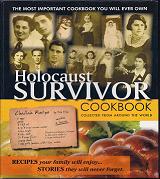
"Holocaust Survivor Cookbook" - (for Hanukkah) - Chicken Paprikasch


Date I made this recipe:  December 8, 2012 (first day of Hanukkah)

Holocaust Survivor Cookbook Collected from Around the World
Published by:  Caras & Associates, Port St. Lucie, Fl
© 2007
Recipe:  Chicken Paprikasch submitted by Marie McIntosh to honor her mother, Erika Weibel Kuss of Frankford, DE

It’s hard to believe that Hanukkah started already—seems like we just had Thanksgiving, no?  As per usual, I often try to select a cookbook with a theme and this book, a recent acquisition, seemed perfect.  Or was it?

Here’s the thing: some would argue that Hanukkah is not exactly the Jewish holiday in which to celebrate a book about Holocaust survivors.  And so at first I was reticent until I thought about the one basic theme that we all carry with us, no matter what religion we practice (or don’t) and that is - Hope.

December is really an awful month when you think about it.  Darkness descends and is only lifted, minute by very long minute, by the Winter Solstice on December 21st.  You have no idea how I, living is this dark and cold part of the US, long for that day because every day thereafter means I get closer to having more light – hooray!  And for Christians everywhere, December 25th of course, celebrates the birth of Jesus and the hope for a better tomorrow.  “Better days ahead,” was what my father always said.

Similarly, the eight days of Hanukkah celebrate the hope and miracle of a lamp holding one day’s worth of oil lasting longer than anybody anticipated.  For eight days, Jewish families celebrated light in a season of darkness.

And when you think of it, hope was probably one of biggest reasons that many Jews (and others) survived the Holocaust - hope that God would deliver them from their suffering and get them on the way to a new life.  It was because of this theme that I could read the endless stories told by both victims and family members about this terrible, terrible time in our history.  Every recipe in this book comes with a story, many of theme similar, some of them not, along with favorite recipes.

This recipe for Chicken Paprikasch was submitted by a daughter to “honor” her mother who was born in Prussia, then a part of Germany, and who landed in a Russian concentration camp at age 17.  She managed to escape, walking away from the icy Russian concentration camp with her feet wrapped in rags.  My brain just doesn’t even want to process that.

I may have mentioned before in a previous blog that reading Anne Frank’s diary as a youngster made a monumental impression on me and led me to do a lot of reading and studying of Nazi-occupied Europe during that time.  In eighth grade, I read and wrote a book report on The Rise and Fall of the Third Reich (yup, eight grade people) and in high school, I wrote a paper about Auschwitz, a concentration camp I visited in 1995.  I also went to the Anne Frank Museum in Amsterdam a few year’s before that (with a killer migraine no less but I waited my whole life to see where the family hid).  I have since moved on to other types of books (like cookbooks) but do like to collect Jewish cookbooks to add to my collection whenever possible. (This book came from my favorite bookstore, Bonnie Slotnick Cookbooks in NYC.)  I was pleased to see that Erika Weibel Kuss’ daughter (our recipe submitter) noted that her mother instilled in her and her siblings a love for reading.  That’s how it all starts, people!

As to the recipe, although many were tempting, I went with the Chicken Parprikasch for one sole reason:  I had leftover mushrooms in my refrigerator from another dish and wanted to use them up.  My mother hated to waste food and so do I.

This has to be one of the easiest recipes I ever put together as it required chicken, mushrooms (which I had already prepped), chicken broth, spices, including paprika, chicken broth and noodles and it took me all of 8 minutes to make (cooking the noodles took the longest).  It was good that evening for dinner and even better the next day when the flavors had time to develop.

So there it is – Happy Hanukkah!  Remember out of the darkness, there is light…and hope.

Chicken Paprikasch - serving size not given but I'd say 4
1 8 ounce package egg noodles (parve - containing no meat or dairy - if you are Jewish or observing Jewish dietary laws)
1 pound boned skinned chicken breasts – chopped
8 ounces fresh mushrooms, quartered
½ teaspoon pepper
½ teaspoon salt
¼ cup chicken broth
1 cup parve sour cream substitute (or regular sour cream if you are not observing Jewish dietary laws. Depending on where you live, this product might be difficult to find.)
1 tablespoon paprika

Cook noodles according to package directions and drain.  Transfer to covered baking dish.

Coat a skillet with olive oil and place over medium-high heat, add chicken, and next 3 ingredients.  Cook 5 minutes or until chicken is done.

Remove from heat and stir in sour cream substitute and paprika.  Spoon over noodles.  Sprinkle with additional paprika.