Showing posts with label Jewish. Show all posts

Tuesday, April 25, 2017

"The Joys of Jewish Cooking" - Karobki Pot Roast (Beef Brisket) - Passover 2017


Date I made this recipe – April 15, 2017 – Passover

The Joys of Jewish Cooking by Stephen and Ethel Longstreet
Published by Weathervane Books New York
© 1974
Recipe:  Karobki Pot Roast (Beef Brisket) – p. 84

This year, the Jewish holiday of Passover started on Monday, April 10th and since I couldn't make a dish on that day, I thought all was lost but no, people, no; Passover ended on Tuesday, April 18th so I snuck this one in just in time.

I'm probably being single-minded here, but when I hear "Passover" or "Hanukah," I think of one word:  brisket.  Sure, there are other foods I can make, like [Jewish] chicken noodle soup, or matzo ball soup, but been there, done that.  I have not though, made a brisket in eons and just felt like this year was "the" year. 

All right then, having decided to make a brisket, all I had to do was go out and find one that would feed two people instead of twenty and all I can say folks, is "Oy."  Oy, oy, oy, what a task this was!  I tried several grocery stores finding mostly briskets costing upwards of $40.00 and that was way too expensive for us plus, I'd have to freeze the leftovers and I didn't want to.

In the end, Whole Foods [Whole Paycheck] had beef brisket that I could buy by the pound and so I was all excited because I could get just what I needed, no more, no less, and planned to round up my afternoon of shopping with a stop there, but first, Target.

Target stores have been in the papers a lot lately because their growth strategies just seem a tad off.  Long gone are the days when you can stop at Target and do one-stop shopping.  Gone too, are some of the "basics" like household cleaners or even just plain old toothpaste.  And not that I'm necessarily keeping track, but I think I've walked out empty-handed probably 9 times out of 10 and it's because they don't stock what I am looking for.  As a for instance, last year, I stopped at Target hoping to find just a basic ace bandage.  Did they have one?  No.  I found it at Walgreens.  Did they have a household bleach I like to use?  No.  I found that elsewhere as well.  The list goes on and on. (Local's, one place where I inexplicably find a lot of things I need is at Frattalone's Ace Hardware on Grand Ave.  Not groceries, mind you, but other household stuff?  Oh my, yes!)

But on brisket day folks, my luck changed.  Mind you, I went into the store looking for another basic item that they didn't have, and then checked out a few other things to no avail, and was about to leave the store empty-handed to go to Whole Foods when I thought "Oh what the hell, check out the meat department to see if they carry brisket."

Folks, it was a regular Passover/Easter miracle!  Not only did they carry brisket, but they were all small cuts of meat, weighing between 1.5 and 2.5 pounds and so not only did I find it, I had options!  And it was priced to move!  So as I said to some friends, today I left totting one damned fine piece of brisket!  I still can't believe it.

So okay then, I had my brisket, I had the other ingredients, and now all I had to do was cook it as directed.

Insert major "record-scratch" moment here.

"As directed" said to simmer a four-pound brisket (full recipe) for 1 hour, then slice it and return it to the heat for another ½ hour until meat is tender.  This is whacked.  Since I was making this for Passover let me just posit that God can perform many miracles, but he cannot make a four-pound brisket cook fully in an hour and a half.  And even though I made half the recipe, the cooking time was still insufficient for my two-pound roast.  Total time elapsed for my mini-roast was about 3 hours and it still could have cooked for about a half an hour longer but I decided enough was enough. 

In a way, I blame myself and my own self-imposed rule of following the directions to the letter because I knew better.  Brisket needs to be slow-cooked. It can slow cook in a crock pot, or it can slow cook in an oven (I used the oven to finish it off), but at minimum, you need to plan on about 3-4 hours or more depending on the brisket's size.  One hour is insufficient.  An additional half hour is insufficient.  In fact, that's my word of the day:  insufficient.

So here's what I did instead:  I checked the meat at the half hour mark because in theory, two pounds of brisket should need half the time (one hour for the full recipe) and it wasn't anywhere near done.  So then I checked it at the hour mark and it wasn't done, and then I cooked it for another half hour on the stovetop and at 1 ½ hours, it was still petty tough.

Okay then....hmmmmm, what to do next, what to do next?

Google.  That's what I did next. I Googled brisket recipes and every single one of them without fail said 3-4 hours minimum without regard to the size.

And so I removed the brisket to a roasting pan, added all the vegetables and sauce, covered the pan with foil and baked the sucker for another hour.  Total elapsed time was now 2 ½ hours and I was getting closer but still wasn't done.

I decided I was going to give it another ½ hour and you know, by then it was almost perfect, but it could have benefited from another ½ hour to be sure.  Maybe more.  But by this point, we were approaching 8:00 p.m. and I just didn't have the patience to go much longer so I pulled it out of the oven and turned the oven off.  Take that!

And so we tried it and we liked it, Hey Mikey, and that was good.  The meat was fairly tender (it should be) and the accoutrements (tomatoes, onion, garlic, red wine, etc.) made for a great "flavor profile," ala Food Network's Chopped.  And there was much rejoicing!

Please note that this recipe calls for a ½ cup dry red wine but if you don't want to go that route, substitute beef, chicken, or veggie broth (Why do I suddenly feel like I'm selecting a option from a wedding reception menu?) and you should be okay.  But if beef is not your thing, then I've got nothin'! 

Wait, that's not true as this book has several other recipes that might appeal...or not!

In the fish department, we have "Herring Pie" (nope), "Gefilte Fish Balls" also a "no" as is – for me – "Pickled Herring."  I know plenty of people though, who like herring so if you want it, you go for it!

If you must have chicken soup, there are a couple of recipes for that.  I love chicken soup but I was set on brisket.  If you want dessert (and boy, was that tempting), then there are plenty that should satisfy, including several strudel recipes and also a cheesecake recipe.  Again, all good but I needed, wanted, had to have brisket, no other substitutes would do.

One of the challenges of this book (besides the brisket's cooking time) was the way it is laid out.  The authors take us through Jewish cooking in several countries or regions and within that region, they give us recipes for "Appetizers;" "Meat;" "Fowl;" "Fish;" "Soup;" "Vegetables;" "Salads;" "Doughs," and "Desserts," and so if you are looking for a particular recipe, you may need to do a bit of hunting.  The countries/regions they included in this book are:

  • Russia
  • Poland
  • Germany
  • Austria
  • Hungary
  • Romania and the Balkans
  • Italy and the Mediterranean
  • France
  • England
  • Israel
  • Middle East and North Africa
  • Republic of South Africa
  • Latin America
  • The United States

If you put the countries and categories together, here is what you'll see in the Table of Contents:
Russia*
§       Meat
§       Fowl
§       Fish
§       Soup
§       Vegetables
§       Doughs
§       Salads
§       Dessert

*Categories vary depending on the country, for example, Russia's list did not include Appetizers but other countries did. 

I must say though, that reading through each section was kind of fun even if it took me longer than I imagined to find the right recipe.  You'll definitely see regional differences in the ingredients used but that too, adds to the fun.

All in all, this was a tasty recipe and one that I might make again sometime when I have half a day to devote to it! 

Karobki Pot Roast (Brisket) – 6 servings - "The karobki was the Czar's official tax on kosher meat.  The title of this dish is meant to be iron – for it survived after the Revolution of 1917."
3 large onions, sliced
1 clove garlic, mashed or finely diced
1 pound stewed tomatoes (Ann's Note:  I used diced tomatoes.  Why?  Because I found myself standing in the Vegetable aisle confused as all get out i.e. did Stewed Tomatoes always contain onions and green pepper?  The cans I looked at that day did.  Rather than screw up the recipe by using ingredients that weren't called for, I stuck with plain old tomatoes, final answer!)
4 carrots, scraped, quartered
Pinch of oregano
Pinch of sugar
Salt, ground pepper to taste
4 pounds beef brisket
½ pound fresh mushrooms
½ cup dry red wine

In a 5-quart pot with a lid put the sliced onions, garlic, tomatoes, carrots, a pinch of oregano, a dash of sugar, and salt and pepper.  Put the meat on top, cover pot tightly, bring to a boil.  Lower heat, simmer for 1 hour.  Ann's Note:  I cannot stress this enough:  You will need more than one hour if you are making a full recipe (4 pounds of brisket) and definitely more than a half an hour if you are making a half recipe (2 pounds of brisket).  So either resign yourself to cook this for at least 2 hours or on the stove, or follow along with me as I "fix" it for you.

After an hour, slice the mushrooms and mix with wine.  Remove meat and slice against the grain.  Add mushrooms and wine to gravy.  Put sliced meat in pot, cover tightly, return to boil, lower heat, simmer for ½ hour until meat is tender.  Serve with potato latkes.  Ann's Note:  Again I say unto you, you need more time.  If your brisket miraculously cooks during this time period, hooray for you, but unless it is the size of a boot heel, it probably won't.  As I mentioned above, I ended up simmering my two-pound brisket for about an hour and a half before moving the whole shebang to the oven to bake for another hour and a half at 300F.

Should you want to skip the simmering portion of the program, slow cook the brisket in a 250-300F oven for several hours.  Cover your roasting pan with heavy duty aluminum foil if your pan does not have a cover.  I think you should probably follow the general guidelines which is to say bake all but the mushrooms and wine for a couple of hours before adding the finishing touches.

The total time for this recipe, as written was 1 and ½ hours for a four-pound brisket. 

Good luck!

By the way, after dealing with this overly-long brisket process, I realized why I hadn't made a brisket in such a long time and it's because of the time requirements, oy.


Friday, February 21, 2014

"Love and Knishes" & "Cooking with Love" & The Way to a Man's Heart is through His Capricorn" - a Valentine's Day meal


Date I made these recipes:  February 17, 2014 (for Valentine's Day—a bit late!)

Love and Knishes – An Irrepressible Guide to Jewish Cooking by Sara Kasdan
Published by:  The Vanguard Press
© 1956; Fifth Printing 1957
Recipe:  Potato Soup – p. 33-34
Purchased at Arc's Value Village Thrift Stores, Richfield, MN

Cooking with Love – A World-Wide Collection of Recipes for Entertaining from One of Chicago's Favorite Hostesses by Florence Kerr Hirschfeld
Published by:  Houghton Mifflin Company Boston
© 1965
Recipe:  Wonderful Chocolate Cake (with Glossy Chocolate Frosting) – p. 291
Purchased at Bloomington (MN) Crime Prevention Association annual sale

The Way to a Man's Heart is Through His Capricorn – A Whimsical Astrological Cookbook by Peggy Holt
Published by:  Price/Stern/Sloan Publishers, Inc.
© 1970
Recipe:  Parfait Pistache (from the Libra chapter) – p. 67
Purchased on Etsy.com from SALLIEandJUDY

When, a few days before Valentine's Day, I announced to my husband that a few of the dishes I wanted to make contained sour cream and butter, he exclaimed – jokingly – "Are you trying to kill me?"

No honey.  Just trying to feed you something fun for Valentine's Day.

But a few day's later, when I got around to making the dishes, I had to wonder if instead of me killing him, he wasn't in fact trying to hasten my demise.  Because later that night, after he came home from a part-time job, he took the soup I made that afternoon out of the fridge to warm up a bowl for a late-night snack and forgot to put it back in the refrigerator.  And so the soup sat out all night.  Now granted, it is winter and our kitchen is not insulated (making it just a bit brisk back there until I turn on the oven) but no way was I eating that soup.  Nuh uh.  Nope.  Visions of emergency rooms replaced visions of love in quite the burning hurry.

Well of course he felt terrible because he was not trying to kill me off nor is he big on wasting food.  These things happen.  Luckily, I was of the mind to make the soup for a second time and I can promise you we have both be vigilant about storing it properly.  Still, all that butter, all that sour cream, all that milk wasted.....sigh.

Now I imagine, although I don't know for sure, that Sara Kasdan, author of the Love and Knishes cookbook from which this soup recipe came, also would likely have sighed and tut-tutted and oy veyed a couple of times at that waste of these yummy ingredients.  Many recipes in her cookbook contain these precious ingredients, some of which sounded yummy, like our soup recipe, but others that I just need a moment to ponder—like noodle or rice kugel which is basically a casserole of butter, sugar, eggs and...noodles/rice.  Nope.  That does not compute. 

I was really tempted to make a knish but that seemed too heavy (yeah, right—like potato soup isn't?) so I passed.  A knish is basically a mound of filling (potatoes, cheese) wrapped in dough.  Think of it as a Jewish Hot Pocket.  Now, I love these things but again, didn't want the knish weighing me down that day as they can be quite filling (with the filling).

By the way, years ago, Andy and I were watching TV show – maybe the "Tonight Show" – and a comedienne, who was a southern Jewish woman, just cracked us up. She talked about southern cocktail parties where the going phrase as hors d'oeuvres were passed was "Y'all want a knish?" The way she pronounced "knish" was just so southern i.e. add more syllables than needed.  "Knish" became "kah-ni-ish" and we became fans of that line.  Still, I veered toward the soup because I had other items to make for our Valentine's Day menu and didn't want to get too bogged down.

Cooking with Love by Chicago hostess with the mostest (who knew?) Florence Kerr Hirschfeld, yielded the very yummy "Wonderful" Chocolate Cake recipe, chocolate, of course, being a mandatory – no exceptions – Valentine's Day incredible edible.  The only thing that puzzled about this recipe was that you had to melt chocolate squares and water together – those two ingredients don't often mix well – and so the texture was somewhat odd even though the taste was delicious.  The glossy chocolate frosting also yielded a few "huh" moments when it came to appearance and the only thing I'll say is that the frosting is good but messy.

And last but not least, a book which made me laugh (but made Andy's forehead wrinkle in confusion—as in "why did you buy that?") is The Way to a Man's Heart is Through His Capricorn, featuring a nude woman (cartoon drawing) on the front.  Similar artwork abounds featuring nude woman with various animals like frogs and lions----we won't go there.  As to the recipes, nothing for February (Aquarius) or March (hubby's birthday) (Pisces) tripped my trigger but wouldn't you know, the ice cream dessert for Libra – my birth month – did!  Coincidence?  Yes!  So in addition to the chocolate cake, we had a parfait of – be still my heart – coffee ice cream, chocolate ice cream, pistachios and...drum roll....dark rum.  Woot!   Does that cake/ice cream combo sound like Valentine's Day, or what?

"Or what," people!  Although the culinary combinations might sound a little odd—potato soup, chocolate cake and ice cream, it all worked.  And hubby was happy.  So there you go—happy hubby, Happy Valentine's Day!

Potato Soup (Milchik) – serves 8
3 cups diced potatoes
1 cup diced onions
2 stalks celery, diced
1 quart water
2 teaspoons salt
1 quart milk
1/8 pound butter (or more)
3 sprigs parsley
1 cup sour cream
2 tablespoons minced parsley for garnish
Paprika

Cook potatoes, onions and celery in salted water until tender (about 30 minutes).  Remove from heat.  Mash vegetables with a potato masher.  Add milk, butter, and parsley.  Return to heat and simmer gently for about 15 minutes (do not allow to boil).  Remove parsley.  Stir in sour cream and allow the soup to remain over a low flame just long enough to heat the cream.  Garnish with minced parsley and paprika.

Ann's Notes:  I made half the recipe and had to adjust my cooking time when boiling the potatoes.  Simmer on low for about 15 minutes, then check.  If necessary, add a bit more water.

I cannot say that the addition of the sour cream made for an attractive-looking soup but the taste was great.  Think of this dish as a bowl of mashed potatoes with a bit of liquid in it.  Yum!

Wonderful Chocolate Cake with Glossy Chocolate Frosting – makes a 9" x 13" pan
For the cake
2 1-ounce squares unsweetened chocolate
½ cup water
6 tablespoons butter or margarine
1 ½ cups sugar
2 eggs, well beaten
2 cups sifted flour
1 teaspoon baking soda
1 cup sour cream
1 teaspoon vanilla
For the frosting (You can also skip the frosting and dust with confectioners' sugar if desired)
3 1-ounce squares unsweetened chocolate
¾ cup evaporated milk
¼ cup water
1 cup sugar
Dash salt
1 teaspoon vanilla

To make the cake, place chocolate and water in top of double boiler and heat until chocolate is melted.  Cream butter and sugar together.  If using electric mixer, beat only at low speed, just enough to blend thoroughly; stir in eggs only until mixed.  Sift flour again with baking soda, then add to butter mixture, alternately with sour cream; mix lightly, starting and ending with flour.  Blend in chocolate and vanilla.  Bake in 9" x 13" x 2" pan, well greased, at 350 for 40 to 45 minutes or until cake pulls away from sides of pan.  Dust with confectioners' sugar or frost with Glossy Chocolate Frosting.  Cut into 3-inch squares.

To make the frosting, melt 3 squares of chocolate in top of double boiler; combine milk, water, sugar, salt and stir into chocolate.  Cook over hot water 20 minutes, then beat with rotary beater 1 minute or until smooth.  Stir in vanilla; cool.

This icing may be made in advance.  It will store well in refrigerator, tightly sealed.

Parfait Pistache – serving size not indicated although I'm guessing it's one serving for you, one for your Valentine!
½ pint coffee ice cream
½ pint chocolate ice cream
1/3 cup dark rum
½ cup crushed pistachio nuts


In parfait glasses, alternate layers of coffee ice cream, crushed pistachio nuts, and chocolate ice cream.  Store in freezer two to three hours.  At serving time, trickle rum over each glass.

Wednesday, December 12, 2012

"Holocaust Survivor Cookbook" - (for Hanukkah) - Chicken Paprikasch


Date I made this recipe:  December 8, 2012 (first day of Hanukkah)

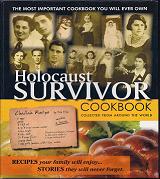
Holocaust Survivor Cookbook Collected from Around the World
Published by:  Caras & Associates, Port St. Lucie, Fl
© 2007
Recipe:  Chicken Paprikasch submitted by Marie McIntosh to honor her mother, Erika Weibel Kuss of Frankford, DE

It’s hard to believe that Hanukkah started already—seems like we just had Thanksgiving, no?  As per usual, I often try to select a cookbook with a theme and this book, a recent acquisition, seemed perfect.  Or was it?

Here’s the thing: some would argue that Hanukkah is not exactly the Jewish holiday in which to celebrate a book about Holocaust survivors.  And so at first I was reticent until I thought about the one basic theme that we all carry with us, no matter what religion we practice (or don’t) and that is - Hope.

December is really an awful month when you think about it.  Darkness descends and is only lifted, minute by very long minute, by the Winter Solstice on December 21st.  You have no idea how I, living is this dark and cold part of the US, long for that day because every day thereafter means I get closer to having more light – hooray!  And for Christians everywhere, December 25th of course, celebrates the birth of Jesus and the hope for a better tomorrow.  “Better days ahead,” was what my father always said.

Similarly, the eight days of Hanukkah celebrate the hope and miracle of a lamp holding one day’s worth of oil lasting longer than anybody anticipated.  For eight days, Jewish families celebrated light in a season of darkness.

And when you think of it, hope was probably one of biggest reasons that many Jews (and others) survived the Holocaust - hope that God would deliver them from their suffering and get them on the way to a new life.  It was because of this theme that I could read the endless stories told by both victims and family members about this terrible, terrible time in our history.  Every recipe in this book comes with a story, many of theme similar, some of them not, along with favorite recipes.

This recipe for Chicken Paprikasch was submitted by a daughter to “honor” her mother who was born in Prussia, then a part of Germany, and who landed in a Russian concentration camp at age 17.  She managed to escape, walking away from the icy Russian concentration camp with her feet wrapped in rags.  My brain just doesn’t even want to process that.

I may have mentioned before in a previous blog that reading Anne Frank’s diary as a youngster made a monumental impression on me and led me to do a lot of reading and studying of Nazi-occupied Europe during that time.  In eighth grade, I read and wrote a book report on The Rise and Fall of the Third Reich (yup, eight grade people) and in high school, I wrote a paper about Auschwitz, a concentration camp I visited in 1995.  I also went to the Anne Frank Museum in Amsterdam a few year’s before that (with a killer migraine no less but I waited my whole life to see where the family hid).  I have since moved on to other types of books (like cookbooks) but do like to collect Jewish cookbooks to add to my collection whenever possible. (This book came from my favorite bookstore, Bonnie Slotnick Cookbooks in NYC.)  I was pleased to see that Erika Weibel Kuss’ daughter (our recipe submitter) noted that her mother instilled in her and her siblings a love for reading.  That’s how it all starts, people!

As to the recipe, although many were tempting, I went with the Chicken Parprikasch for one sole reason:  I had leftover mushrooms in my refrigerator from another dish and wanted to use them up.  My mother hated to waste food and so do I.

This has to be one of the easiest recipes I ever put together as it required chicken, mushrooms (which I had already prepped), chicken broth, spices, including paprika, chicken broth and noodles and it took me all of 8 minutes to make (cooking the noodles took the longest).  It was good that evening for dinner and even better the next day when the flavors had time to develop.

So there it is – Happy Hanukkah!  Remember out of the darkness, there is light…and hope.

Chicken Paprikasch - serving size not given but I'd say 4
1 8 ounce package egg noodles (parve - containing no meat or dairy - if you are Jewish or observing Jewish dietary laws)
1 pound boned skinned chicken breasts – chopped
8 ounces fresh mushrooms, quartered
½ teaspoon pepper
½ teaspoon salt
¼ cup chicken broth
1 cup parve sour cream substitute (or regular sour cream if you are not observing Jewish dietary laws. Depending on where you live, this product might be difficult to find.)
1 tablespoon paprika

Cook noodles according to package directions and drain.  Transfer to covered baking dish.

Coat a skillet with olive oil and place over medium-high heat, add chicken, and next 3 ingredients.  Cook 5 minutes or until chicken is done.

Remove from heat and stir in sour cream substitute and paprika.  Spoon over noodles.  Sprinkle with additional paprika.

Monday, February 1, 2010

"The Jews of Poland - Recollections and Recipes" - Chicken Soup with Almonds


Date I made this recipe: January 31, 2010

The Jews of Poland – Recollections and Recipes by Edouard de Pomiane, Translated from the French by Josephine Bacon
Published by: Pholiota Press, Inc.
Originally published in French in 1929; this edition © 1985
Recipe: Chicken Soup with Almonds p. 71-72

Well call me magazine geek but I love reading the Smithsonian (magazine) because every month I get to either learn or relearn something of interest. The magazine covers it all-arts, science, travel and history. Can more fun be had? I think not.

The recent issue, February 2010, for example, contained an article about the Egyptian Sphinx, a recap of the infamous sit-in at the Woolworth’s Counter in Greensboro, NC during the civil rights movement, and an article about Auschwitz, the famous Nazi concentration camp located just outside Krakow Poland.

My husband and I visited Krakow back in 1995, all due to an issue of the Smithsonian, but it wasn’t an article about Auschwitz that drove us there but rather a fascinating article about Krakow’s famous 700 year-old underground salt mines. (Who knew?)

At the time of the article, Andy and I were toying with the idea of going to Eastern Europe but had not considered going to Krakow. Initially, he was not too keen on going, particularly since it was a 10-hour train ride from Prague to Krakow but as I am wont to do, I beg, pleaded and whined in order to get my way and so we embarked on the train and were off and running (at train speed though, which is to say somewhat slow).

Years later, we both agree that it was one of the highlights of the trip. Krakow is absolutely beautiful having been spared the devastating bombs raids of Allied and enemy (Axis) forces during WWII. And the salt mines were really, really interesting, even though they were further down in the ground than I was comfortable going. (Believe it or not, there is a huge chapel and ballroom carved from salt where many locals hold their weddings.) But the big draw to Krakow is, of course, to tour the prison camps of Auschwitz and neighboring Birkenau.

As a kid, I was an avid reader (well, okay, I still am) and I must have read Anne Frank’s diary over and over again (and finally visited the museum in Amsterdam years later) and that started a whole wave of reading regarding Hitler’s Germany during WWII. I mean, do you know of another teenage girl who did a book report on The Rise and Fall of the Third Reich while in high school?

And so, dear reader, there was no way I was going to pass up the opportunity to take a peek at the camp while I was in the neighborhood. And I have to say, it was a surreal experience.

On the one hand, the camp is so pristine today that it looks like it could have been used as a summer camp for inner-city youth. And so it’s hard to reconcile what went on there with how it currently looks—flowers are growing, buildings are pristine and “guards” are friendly.

On the other hand, while you are there, you also see the things left behind by the prisoners – suitcases, clothing, shoes, hair – all piled a mile high and deep such that you are just rendered speechless. And then there’s the movie about the camp’s liberation and you are just shocked beyond belief at the condition of the human body of those who somehow remained standing to the last days. But the thing that stays with me always is the photograph of a woman who could have been my grandmother (with beautiful, white hair and just a lovely, wrinkled face) who was one of the first political prisoners in the camp. (My grandmother was Catholic but grew up in Austria Hungary so I suppose anything would have been possible had she stayed put in Europe). And you just have to ask yourself “Why” a million times and even then it just doesn’t make sense.

And so how this whole experience comes full circle is that according to the article in the Smithsonian, January 27th was the 65th anniversary of the liberation of Auschwitz and Birkenau and so I decided to pull out a cookbook I bought a long time ago at Kitchen Arts and Letters in New York and make a commemorative dinner. Many of the recipes were a little intimidating because they called for meats I didn’t want to use or schmaltz – chicken or goose fat – but I forged ahead until I came to this simple soup. It seemed the least that I could do.

Since this book was written before Hitler started his quest for the “final solution,” it doesn’t discuss anything about the war and all of the photos of cities in Poland such as Krakow (also spelled Cracow) and Warsaw are from 1929 when things we still all fine and dandy. And this people, is why the Smithsonian comes in darned handy sometimes. It fills in the gaps and makes us think and learn and connect and go “ah ha!” I like that about a magazine. This one connected an historic event to a cookbook I owned and as Martha Stewart says “that’s a good thing.”

To read the article in question, go to www.smithsonian.com and look for the article Can Auschwitz Be Saved? by Andrew Curry (February 2010 issue). (An even better idea is to become a member of the Smithsonian Institution via the magazine—a subscription gets you entry to all the Smithsonian museums in Washington (and the gift shops—most important) as well as the Cooper Hewitt Museum in New York City (equally as cool)).

Chicken Soup with Almonds – 8-10 servings
NOTE: This recipe takes 6-8 hours to make. Plan ahead!
2 ½ pounds chicken, preferably a boiling fowl, cut into 8 serving pieces (Note: allow a ½ hour to kosher the chicken, instructions below)
Coarse (kosher) salt
1 tablespoon of chicken or goose fat (I checked online and the standard substitute seemed to be Canola oil so I went with that.)
3 medium carrots, sliced into julienne strips
2 small turnips, sliced into julienne strips
2 leeks, white parts only, thinly sliced
2 tablespoons flour
½ teaspoon salt
20 almonds, blanched and ground or 4 tablespoons almond meal (Believe it or don’t, I actually had a small stash of blanched almonds in my cupboard. Score!)
½ teaspoon paprika

To kosher the chicken, sprinkle it with the coarse (kosher) salt, leave it sit for 30 minutes, then rinse it thoroughly in running water.

Melt the fat in a Dutch oven or soup pot and sauté the vegetables. As they start to color, add the flour. Stir and allow to brown lightly. Add enough warm water to cover the contents of the post, about 1 pint (16 fl oz). Add the salt and ground almonds. Simmer for 30 minutes.

Add the chicken pieces to the pot. Add another pint (16 fl oz) and the paprika. Cover the pot tightly and simmer for six to eight hours.

Remove the chicken bones from the liquid, and discard them. Strain the soup and puree the solids. Mix this puree with the soup, season to taste and return to the heat. Serve very hot.

By the way, I wouldn’t be me if I didn’t note the irony that the translator of this Jewish cookbook had the last name Bacon.

Wednesday, September 23, 2009

"The Molly Goldberg Jewish Cookbook" - Vegetable Soup


Date I made this recipe: September 20, 2009

The Molly Goldberg Jewish Cookbook by Gertrude Berg and Myra Waldo
Published by: Pyramid Books
© 1955; Fifth printing, November 1965
Recipe: Vegetable Soup - p. 20

I never should have doubted Molly Goldberg.

I made this soup from her cookbook in “honor” of Rosh Hashanah, a Jewish holy day usually referred to as the Jewish New Year. But since the weather was still warm I almost bagged the whole thing (soup on a hot day??) and that would have been A Bad Idea.

It would have been a bad idea because in looking at the ingredients, it pretty much called for fresh veggies and that is very summery…although I have to admit that I couldn’t get my hands on fresh lima beans and peas and so used frozen and warmed them up in the microwave for just a little bit.

Any who, this is a really good recipe although I almost ruined it by letting the Crisco get too hot in the pan. Perhaps I was channeling fried chicken instead of sautéed onions? Luckily, I caught the error of my ways (uh, the smoking oil was kind of a tip-off) and turned off the gas before I had myself an incident. After the pan cooled down, I tried again, this time with great results.

By the way, the author of this cookbook, Gertrude Berg, created and played the character of Molly Goldberg in a sitcom called The Goldbergs that ran on radio and TV from the 30’s to the mid-50’s. At the time that I purchased this cookbook (years ago) I had a vague recollection of the TV show since it ended a little bit before my time. But my dad often quoted what I gather was one of Molly’s famous lines - “Yoo-Hoo Mrs. Bloom” - when he was trying to get me or my mom to pay attention. I found all this out serving the internet - Google is a great thing!

Vegetable Soup (no serving size given)
4 tablespoons shortening
2 onions, sliced
2 carrots, sliced
1 cup shredded cabbage
2 stalks celery
½ pound green peas, shelled (or use frozen)
¼ pound string beans, halved
¼ pound lima beans, shelled
7 cups water (I added 6 cups of water and 1 cup of chicken broth just for something different)
2 teaspoons salt
¼ teaspoon freshly ground black pepper
½ teaspoon sugar
2 tomatoes, peeled and chopped
2 potatoes, peeled and diced
¼ pound fine noodles, cooked and drained
1 tablespoon chopped parsley

Melt the shortening in a saucepan. Add the onions and sauté for 10 minutes, stirring frequently. Add the carrots, cabbage, celery, green peas, string beans, and lima beans. Cover and cook over low heat for 10 minutes. Add the water, salt, pepper, sugar, tomatoes, and potatoes. Cover, and cook over medium heat for 30 minutes. Add noodles and parsley. Cook for 5 minutes additional. (Note: I went about 45 minutes total. The veggies were just perfect—not too crispy but not too soggy, either).

Thursday, April 24, 2008

'Jewish Cooking in America" (Nathan) & "The 2nd Ave Deli Cookbook" & "The Book of Jewish Food" (Roden)

Date I made these recipes: April 20, 2008 (Passover)

Jewish Cooking in America by Joan Nathan
Published by: Alfred A. Knopf
ISBN: 0-394-58405-8 © 1994
Recipe: My Favorite Brisket – p. 175

The 2nd Ave Deli Cookbook – Recipes and Memories from Abe Lebewohl’s Legendary Kitchen by Sharon Lebewohl and Rena Bulkin
Published by: Villard
ISBN: 0-375-50267-X © 1999
Recipe: Potato Kugel – p. 150-151

The Book of Jewish Food – An Odyssey from Samarkand to New York by Claudia Roden
Published by: Alfred A. Knopf
ISBN: 0-394-53258-9 © 1996
Recipe – Carrot Tzimmes (Honeyed Carrots) – p. 164

Being a gentile and all, I don’t know if one wishes the Jewish community a happy Passover or not, but I will pass on a hearty “thank you” to today’s cookbook authors. Every dish was a winner.

Let’s start with the brisket. I’ve never met cookbook author, Joan Nathan, but I want to. I’ve heard her several times on Public Radio’s The Splendid Table and she always has great stories to tell. Her book is the same—a story for every recipe and when I got to “My Favorite Brisket,” I knew that’s what I had to make. And so off I went to find one!

Knowing that one of the Byerly’s stores in St. Louis Park, Minnesota caters to a large Jewish population, I drove over to that store and found plenty of kosher brisket. But at a price of $28.00 on up, I decided that I didn’t need kosher and that chuck roast, as noted in the recipe, would make a fine substitute. And it was indeed delicious. There’s nothing like a piece of meat that is slow-cooked.

And then to accompany my brisket, I pulled another cookbook off the shelf, this time The 2nd Ave Deli Cookbook. (I have several Jewish cookbooks but since I wasn’t feeding an army of people or catering at a Passover party, they’ll have to wait until another time.). But before we get to the recipe discussion, you need a brief history of this deli.

Once upon a time, a man named Abe Lebewohl opened up a deli on 2nd Ave and 10th Street (hence the name) in New York City’s East Village. And they did booming business. And then somebody murdered Abe (to this day, the killer has not been found) and all of New York was in shock. The 2nd Ave Deli didn’t just serve food it served FOOD, lots and lots of good food and with a lot of heart thrown in for good measure.

Despite everything, Abe’s family carried on and last year, Abe’s nephew moved the restaurant to Murray Hill. Frankly, I don’t care where it is, I’d walk across Manhattan to get there. Its’ just that tasty.

Several years ago, a friend and I ate at the deli and I’m not kidding when I tell you everything was piled a mile high. I had a pastrami sandwich (a mile high) and a bowl of potato salad (a mile high) and whatever Susan had was a mile high as well. And I was quickly stuffed to the gills and was planning to abandon ship when our server came by and suggested a doggie bag.

Now, silly me, I said I didn’t think that was best because I was soon heading for the airport to come home to Minneapolis. The look she gave me was one of horror but she recovered and said “Honey. Take it with you. You can eat it on the plane.”

And so I took it with me and I ate it on the plane (back in the day before most of us are forced to feed ourselves in the air or die trying) and it was just as tasty on bite number 22 (or so) as it was on bite number one. I have to admit I was rather surprised that nobody attacked me to wrestle the food out of my hands but maybe by then the smell had diminished such that nobody knew the treasure I had in my lap!

The same could not be said for a flight out of New York a couple of years ago when I brought back two pounds of Zabars coffee, one pound of Italian cookies (always the ribbon cookies, always) and a dozen H&H bagels. (My girlfriend is kind enough to live in the Upper West Side where all these shops exist). When I got up to the airline counter, the agent, who had been reading something on the screen, suddenly snapped his head up, sniffed the air and said “I smell bagels!”

People, I am not ashamed to say that I tried my best to bribe my way into first class with my bagels, alas to no avail. Well, he has only himself to blame for the near-revolt that happened when I got on the plane with my culinary delights. I was suddenly everyone’s best friend. (Next time around I’ll way my leftover sandwich and see what that does – can’t hurt!)

This potato kugel recipe will be your new best friend as well. It does not disappoint and although I had my misgivings about it at first (it sounded rather bland), it was a perfect accompaniment to the brisket a/k/a chuck roast. In fact, I’m thinking it will be a perfect accompaniment to eggs in the morning. And don’t even get me started on the shredder disk for my Cuisinart. I love that thing and could have sat there all day shredding everything I could get my hands on. It’s the littlest things that mean so much.

As to the vegetable portion of our program, the carrot tzimmes I made to balance out the heaviness of the meat and potatoes was just the thing. The cookbook says that they are typically eaten at Rosh Hashanah (the New Year) and are a symbol of prosperity and good fortune. I guess I missed that holiday by just a few months but hey, life is too short to stress about when to serve carrots. I’m in need of some prosperity now and so hope I’m forgiven for either being late to the party or getting a jump on next year!

Finally, let me leave you with a cute little anecdote from The Book of Jewish Food:
Mrs. Cohen, who is having lunch with Mrs. Marks, says, “Do you know Debra Joseph is having an affair?” Mrs. Marks asks, “Who’s doing the catering?”

My Favorite Brisket – Serves 8 to 10
2 teaspoons salt
Freshly ground pepper to taste
1 5-pound brisket of beef, shoulder roast of beef, chuck roast, or end of steak
1 garlic clove, peeled
2 tablespoons vegetable oil
3 onions, peeled and diced
1 10-ounce can tomatoes
2 cups red wine
2 stalks celery with the leaves, chopped
1 bay leaf
1 sprig fresh thyme
1 sprig fresh rosemary
¼ cup chopped parsley
6 to 8 carrots, peeled and sliced on the diagonal
Optional: jar of sun-dried tomatoes

Sprinkle the salt and pepper over the brisket and rub with the garlic. Sear the brisket in the oil and then place, fat side up, on top of the onions in a large casserole. Cover with the tomatoes, red wine, celery, bay leaf, thyme, and rosemary.

Cover and bake in a preheated 325-degree oven for about 3 hours, basting often with pan juices.

Add the parsley and carrots and bake, uncovered, for 30 minutes or more or until the carrots are cooked. To test for doneness, stick a fork in the flat (thinner or leaner end of the brisket). When there is a light pull on the fork as it is removed from the meat, it is “fork tender.”

This dish is best prepared in advance and refrigerated so that the fat can be easily skimmed from the surface of the gravy. Trim off all the visible fat from the cold brisket. Then place the brisket, on what was the fat side down, on a cutting board. Look for the grain – that is, the muscle lines of the brisket-and with a sharp knife, cut across the grain.

When ready to serve, reheat the gravy.

Put the sliced brisket in a roasting pan. Pour the hot gravy on the meat, cover, and reheat in a preheated 350-degree oven for 45 minutes. Some people like to strain the gravy, but I prefer to keep the onions because they are so delicious.

Joan’s final note on this recipe was to add a jar of sun-dried tomatoes to the canned tomatoes as they add a more intense flavor to the brisket.

Potato Kugel – Serves 8

Check out this hilarious introduction to the recipe: “Like all Jewish kugels, this makes for heavy eating (starches like mashed potatoes or rice go down like celery sticks by comparison). So what’s the problem? You were planning to go dancing after the Seder, maybe?”

2 ½ pound potatoes, peeled and quartered
2 large onions (use 1 ½ cups grated; don’t tamp down)
3 eggs beaten
1 teaspoon baking powder
¾ corn oil
1 cup flour
2 ½ teaspoons salt
¼ teaspoon pepper
1 cup matzo meal
Corn oil for drizzling and greasing pan

Preheat oven to 400 degrees. In a food processor, fine-grate potatoes (don’t liquefy, leave some texture), and strain to eliminate excess liquid. Don’t overdo it; just let the water drain out. Fine-grate onions, and mix in a large bowl with potatoes. (If you don’t have a food processor, you can grind the potatoes and onions in a meat grinder.)

Add eggs, baking powder, ¾ cup corn oil (most of it cooks out), flour, salt and pepper; mix well. Fold in matzo meal, making sure that everything is very well blended.

Pour batter into a greased baking pan (your kugel should be about 2 inches high) and drizzle top with corn oil from a flatware tablespoon. Bake for 55 minutes, or until top is golden brown (check occasionally to see). Serve hot.

Carrot Tzimmes (Honeyed Carrots ) – Serves 6
1 ½ pounds carrots, sliced
3 tablespoons goose fat, butter, or light vegetable oil
Salt
Juice of 1 orange
¼ teaspoon powdered ginger
2 tablespoons honey

In a large wide pan, saute the carrots in the fat, stirring and turning them over. Add the rest of the ingredients and water to cover. Simmer gently, covered, for ½ hour, or until the carrots are tender. Remove the lid towards the end to reduce the liquid to a shiny glaze.